Money for nothin..

There are lots of things in today’s society we take as a given. Things that just ‘are’. We assume they will always be and can’t imagine what it was like before. Ironically sometimes when these things change its without much fanfare and appears logical.

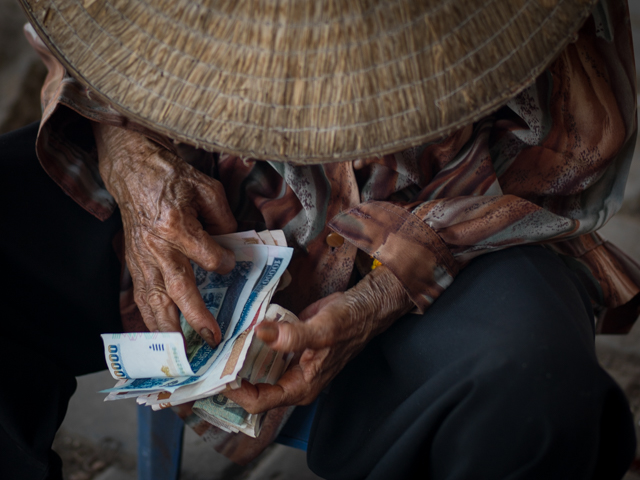
Prior to Covid the notion that we could pay people for doing nothing seemed like madness and any heratic that trundled out such nonsense was unceremoniously discarded. In its most recent telling Rutger Bregman argued that not only was it a good idea but it also saves governments money. Needless to say his speeches caused a stir and propelled him into the spotlight to face the scorn of sensible thinking.

Far from radical, Bregman’s thesis is in fact based on previous work into the relationship between a universal basic income and societal wellbeing. Ultimately resulting in not only a happier society but a healthier more law abiding community with near zero poverty. This in turn saves governments vast sums of tax revenue that can be put to better use.

In February of 2020 all around the world governments struggled with the inevitable consequences of shutting down the economy and forcing companies to send their employees home. How would companies be able to continue paying staff let alone stay in business? It became clear that the burden would fall to governments to mitigate the mass unemployment and poverty that would follow. Then with short shrift they moved to provide allowances and benefits to anyone blocked from working. Some more forward thinking governments saw that the infrastructure was already in place via the employer- employee relationship. So if they provided the cash to the companies the companies could keep paying their staff and indeed mandated that they do just that.

So in a matter of weeks the conversation about universal basic income moved to how best to apply it. Helicopter money, benefits, guaranteed salaries etc.. leading to tricky questions including how to righteously deal with people out of work prior to Covid who are now getting more than they ‘should’. The age old distraction of the people vs the people.

Universal basic income: Next government commits to a pilot programme to trial it

The idea behind UBI is to give adults an automatic payment from the State that isn’t means tested and is given regardless of whether you have a job or not, as an alternative to in-work tax credits and core social welfare payments.

Sean Murray thejournal.ie

But bickering over scraps aside, the genie is out of the bottle now. How could a government expect to get away with a return to the old order. Indeed governments are realising there is no going back and must seriously look at better provisions for the people they represent.

Let’s have a look at ya

In 2011 France was embroiled in a legal scandal that hit World headlines. They enacted a controversial ban of face coverings in public. The ban weighted up the rights of religious expression against societal norms in France and it’s territories.

Obviously this was seen as an affront to the Islamic community. The arguments ranged from sexism to security risks on one side and discrimination to freedom of choice on the other. But the ban, including any face covering in public with the exception of a motorcycle helmet while riding, went ahead.

Eventually the ban was enacted and became part of French law with serious consequences for violations. Fines and ‘re-education’ for infringements, with a fine of up €30,000 for forcing someone to wear a face covering, in particular anyone under the age of 18.

Indeed France, while at the spearhead of legislation, is not alone. Many other countries impose similar bans on face coverings including Spain, Italy, Denmark, Belgium, The Netherlands, Luxembourg etc.

It will be interesting how these governments now plan to move forward as they mandate face coverings, in violation of the ban, in all public situations. Will there be legal challenges that eventually overturn the face covering bans? or risk a double standard that could result in banning of face coverings for the suppression of viral infections?

One thing is sure it will likely reopen that debate and cause division at a time when we need to come together.

How many teachers does it take to…

Pupil-teacher ratio in primary schools to reach lowest-ever level

The pupil-teacher ratio (PTR) in Irish primary schools will be at its lowest ever level next September, when it is cut to one teacher for every 26 pupils, down from 27:1.

Writes Katherine Donnelly of the Independent.ie

While some progress has been made since that article, with an increased number of teachers, class sizes remain very high with an average of 24+.

Source: www.eduction.ie key statistics July 2019.

But something is about to change that awesome pace. As Ireland emerges from lockdown it faces a big issue and it’s not alone, many countries are in a similar boat. How do kids social distance in a small room of 24+ ?

Obviously it’s just not possible which leaves a few options :

  1. Keep schools closed until this passes.
  2. Only allow smaller numbers of kids at any one time
  3. Ignore the risks
  4. Take a leap into the future.

Why would we beat about the bush and not take this opportunity to progress our education systems. We are awash with cheap money, circumstances are forcing some change and it will inevitably pay off in the long term and certainly in the short term with additional jobs. Build more and better classrooms, modernise our schools, enhance the curriculum with dedicated courses like driving, facilitate remote learning by default to name a few ideas.

Children are the bedrock of any society, it stands to reason that the more well rounded the children are, will dictate the kind of society we end up with. We don’t have to look too far to see the impact that starving families of a good education for their children causes. The spiral of poverty ensues and ultimately that doesn’t end well for society. We have to value our youth, all of them, and help them develop in the best way we can.

While we are opening that door why not look to overhaul other problematic areas in our education system. Start with the low hanging fruit, exams. Surely it’s time to continue the precedent set this year by cancelling the leaving certificate in Ireland. Yes the temporary solution wasn’t ideal but there are lots of proven models we could transition to.

It would also be nice to elevate our respect for people whom we entrust our children’s education to. Perhaps as with front line workers we should start appreciating them more especially in their pockets.

Ireland stands tall in the World via the quality of its graduates. Perhaps it’s time to meet those expectations head on with a quality education system.

What’s the worst that could happen, go back to pilling children on top of each other to tick the box that we fulfilled our duty?

We are the 100%

at the end of the rainbow

As the spread around the world accelerated and societies struggled to find an appropriate response one thing was abundantly clear. We are all equal in the path of a global viral pandemic.

We quickly began to view our communities as a singular entity. We became acutely aware that we are only as safe as our weakest link. If one gets sick they can pass it to one or many others causing a ripple effect. So we need to stop everyone from getting sick.

All of a sudden governments rallied to protect their health services, in the process elevating health care workers to a justified position of respect in society. Similarly the weakest and ironically most isolated members of our societies, the homeless, were viewed in a different light. Many countries solved an age old homelessness problem overnight, by providing safe shelter to all. People’s salaries were protected removing one stress of forced isolation. Healthcare for all almost became a reality. We got to spend lots of time with our families!

It started to feel like maybe there will be some silver linings to this horrific event. People singing on balconies, daily applause for front line staff, respect for the elderly, help thy neighbour attitude. These things happened and people felt them.

Would a residual effect be so bad?

Welcome

Welcome to Covid Curiosities.

The effects of Covid on our societies has been dramatic and extremely fast. Much of the impacts are currently, rightly so, focused on the negative human cost of the virus and we are not out of the woods yet. Our thoughts go out to all who have been affected.

Some other impacts are also already been observed around the world. These include economic, political, social and technological. Here at Covid Curiosities we will explore some of these and look at the potential future consequences they might have. Some may be fleeting until a vaccine or other virus management mechanism is found, while others could have more longevity and become part of our everyday world.

Back in 2006 on reports of a potential security risk to airlines almost overnight air travel changed forever. We don’t think about it much these days but to date we are still required to limit the quantity of liquids we carry on board. Who back in 2006 would have imagined that nearly 15 years later we would still be applying that restriction.

Pandemics can lead to massive changes. They are one of few events that are attributed with moving socialal norms at an accelerated pace and shifting policies and behaviour in their wake. Will this one fizzle or fuel fundamental change ?